Viewing archives for Hereford Beef

Great British Beef Week focuses on sustainability

British beef farmers are to receive industry-wide recognition at the end of April, with their support for sustainable production practices being the focal point of Great British Beef Week 2021.

The campaign is to take place between 23-30 April 2021, with organisers Ladies in Beef once again supported by AHDB, as well as Red Tractor, National Farmers Union, The Royal Agricultural Benevolent Institution and Hybu Cig Cymru.

Great British Beef Week 2021 will proudly showcase the strides being taken by British farmers in the sphere of sustainability, with Britain continuing to maintain its position, as among the most sustainable in the world.

The campaign is to be run predominantly via digital channels, with regional media and in store activity also being used to highlight innovative and sustainable farming methods from producers across Britain.

Jilly Greed co-founded Ladies in Beef in partnership with NFU president Minette Batters. She said: “Great British Beef Week enables us to shine a light on all aspects of the beef production process. Our farmers are passionate about the beef they produce and are committed to delivering high quality red meat for consumers to continue to enjoy.

“Managing land in a sustainable way is a fundamental responsibility of the modern-day farmer. This includes farming regeneratively, improving grasslands and paddock grazing, planting trees, maintaining wildflowers for the bee population, or harvesting and giving cattle rainwater to drink. British beef production boasts a carbon footprint of just less than half the global average, and reflects the hugely important and positive work our farmers are putting in day-by-day. It’s vital that we keep bringing attention to the ways our producers are respecting the land, whilst also producing the foods we enjoy eating.”

Industry representatives and other stakeholders who are keen to support Great British Beef Week 2021 can do so by visiting www.ladiesinbeef.org.uk. Extra information on the campaign, as well as some useful downloadable content, is also available.

Further campaign-related news will be released in the weeks leading up to Great British Beef Week 2021. Look out for #GBBW21 to join the conversation.

Other news

See all news

Research shows pasture-fed beef high in omega-3

A research paper just published in the scientific journal Future Foods, suggests certified grass-fed beef could be recognised legally as a ‘source of long-chain omega-3 fatty acids’, following work carried out at Newcastle University.

In humans, these omega-3 fats have anti-inflammatory properties and a deficiency contributes to a wide range of adverse mental and physical health conditions, including coronary heart disease. However, a major weakness of many modern diets around the world is a shortage of these types of fatty acids, exacerbated by excess omega-6 fats.

“While differences between organic and conventionally reared beef have been studied before, this is the first record of the extra benefit from cattle fed 100 per cent forage diets throughout their entire life,” says lead researcher Gillian Butler.

“We found that Pasture for Life beef has more than 40mg long-chain omega-3/100g of the meat. This means certified farmers could make a nutritional claim when selling their beef, as it qualifies as a ‘source for omega-3 fatty acids’ under European Food Standards.”

Non-organic and organic sirloin steaks were bought from two supermarkets during May and June 2019. These were compared with steaks from cattle from two farms certified Pasture for Life – meaning they were 100% pasture-fed. Steaks from animals kept primarily for vegetation management, also known as conservation grazing, all of which were 100% pasture-fed, were also included in the study, which considered the fat composition of each steak.

“The results show clear differences between the concentration of the good long-chain omega-3 fatty acids and the not-so-good omega-6 fatty acids in the meat between the cattle diets (see figure 1).

“They confirmed that feeding grains and cereal by-products produces less omega-3 fatty acids in the meat and more of the less desirable omega-6 fatty acids. The ratio of the omega-6 to omega-3 is also much poorer for grain-fed beef at 7:1 compared to a healthier 2:1 for beef from 100 per cent pasture-fed cattle.

“This research clearly shows that what animals eat has a direct impact on the quality of the meat which consumers eat,” says Jimmy Woodrow of the Pasture-Fed Livestock Association, which lies behind the Pasture for Life meat and dairy certification standards.

“The fatty acids we need to eat more of, occur in far higher concentrations in meat from animals fed just on diverse pasture and forage.

“This is exciting news; the scientific evidence is increasingly backing up what our farmers are doing and shows their meat is of the highest nutritional quality for people to eat.”

The paper, ‘Forage-fed cattle point the way forward for beef?’ is published in ‘Future Foods – A Dedicated Journal for Sustainability in Food Science’ and can be read here.

Other news

See all news

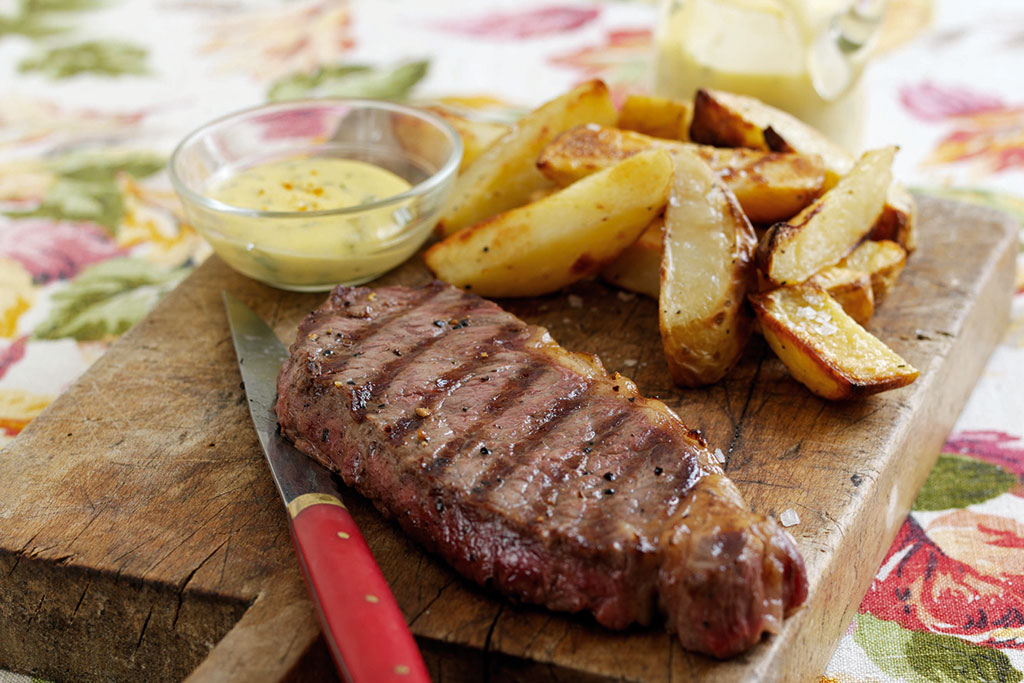
AHDB urges public to ‘stay home and celebrate #steaknight’

With the nation’s restaurants closed for the foreseeable future, farmers and chefs are teaming up to help people enjoy the perfect steak dinner at home.

Usually, 20 per cent of beef in the UK is consumed in the eating-out market, with steak a popular choice, but current closures mean there will be 2.5 billion fewer eating-out occasions between April and June this year*.

With social media an increasingly important source of recipe inspiration, AHDB is rallying industry and chefs to use the hashtags #steaknight and #makeitsteak over the next three months to show consumers how to enjoy restaurantquality steak in the comfort of their own home.

The initiative aims to put steak on the menu for some of the additional 500 million meals** a week which will now be consumed at home during lockdown.

For those unsure where to start, the Hereford Cattle Society has a range of quick and easy recipes on its Hereford Beef website.

Will Jackson, AHDB strategy director for AHDB Beef & Lamb, said: “We want to join up the supply chain and showcase the fantastic ways we can all enjoy an eating-out experience in the comfort of our living rooms by linking up communities across social media with farmers and chefs to share their expert knowledge and tips.

“We encourage everyone to prepare and share simple steak recipes to help people cook with confidence in their own home during these difficult times.”

Steak can also make a valuable contribution to a balanced diet, as red meat is naturally rich in protein, low in salt and provides eight vitamins and minerals which contribute towards good health.

Red meat, such as beef, is one of the main sources of vitamin B12, which is typically only found naturally in animal products, such as meat and milk. Vitamin B12 helps the immune system work normally and contributes to normal psychological function.

#Steaknight is part of AHDB’s extensive consumer-focused marketing and PR programme, and complements Great British Beef Week, taking place from 23 to 30 April.

Other news

See all news

AHDB offers support to boxed beef schemes


AHDB has produced supporting materials for farmers who are looking to start up or are already running their own farm beef box scheme.

The kit provides cutting specifications to produce 20 boxes per carcase consisting off roasting joints, grilling/frying steaks, casserole joints, braising steaks, mince and diced beef (boxes contain 10 –12 kg depending on carcase weight).

The kit also contain a guide which illustrates the animal to meat cut yield, a template for printing posters and labels (freezer-proof meat labels are recommended) and a printable recipe leaflet to complement all the cuts in the meat box . Those producers who are considering getting involved in meat retailing or opening a farm shop and require information, are advised by AHDB to look at the FSA website for a full checklist of legislative requirements 

Guidelines on the layout of a small cutting plant are also available. AHDB emphasises it is important that farmers contact their local authority to register their food business. It also suggests that free independent advice about food industry legislation and regulations, can be made by contacting the National Craft Butchers

Other news

See all news